

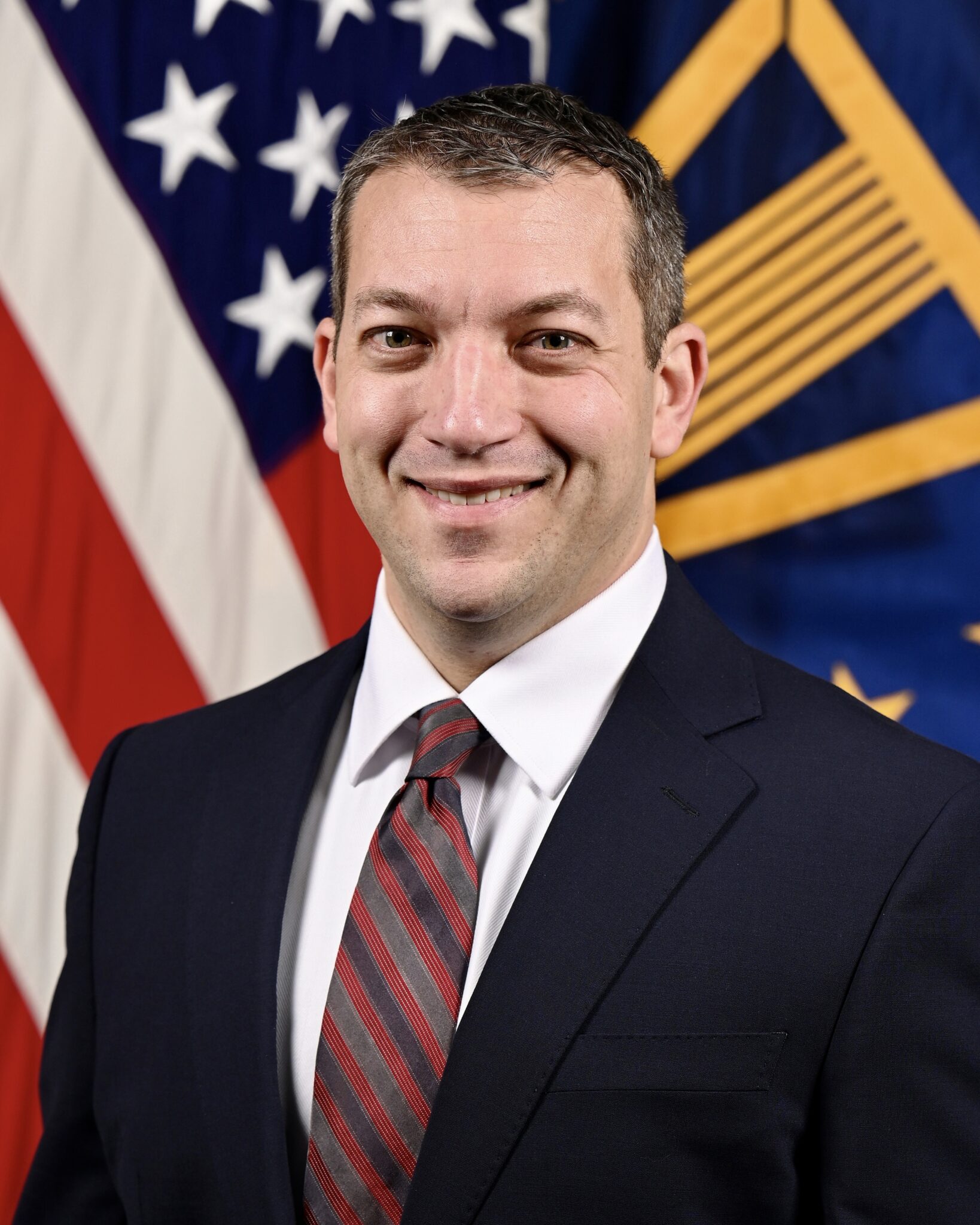
Several years ago, Jacob Glassman turned down what colleagues viewed as a coveted federal promotion because he knew the job wasn’t the right fit.
That decision instead opened the door to a role as a program manager at the Strategic Capabilities Office, setting him on a trajectory that would eventually lead to his current position as deputy assistant secretary of War for enabling technologies for the Department of War.
Today, Glassman oversees three critical portfolios: Trusted microelectronics; nuclear command, control and communications; and space. He’s focused on accelerating the delivery of technology to the warfighter, and his approach is shaped by a simple philosophy: Move faster, challenge conventional thinking and pursue work that makes a difference.
In this Q&A, Glassman discusses the career decision that changed his trajectory, what public service means to him and why he believes the DOW needs to recapture the speed and urgency that once produced transformational capabilities in record time.
Tell us about your current role and the mission you support. What does a typical day look like for you?
I’m currently serving as the Deputy Assistant Secretary of War for Enabling Technologies. In this role I’m responsible for three critical portfolios: Trusted Microelectronics, Nuclear Command, Control and Communications (NC3), and Space.
No two days look the same. My primary focus is aligning these portfolios and driving a culture of speed and delivery, the same mindset that produced the Nautilus in three years and the P-51 Mustang in just 102 days. I work every day with some of the most talented and dedicated teams in the Department to put asymmetric, lethal capability into the hands of the warfighter as quickly as possible.
Looking back, was there a pivotal moment, decision or experience that shaped your career in government?
Several years ago I turned down what most people considered a “Holy Grail” federal job, a non-supervisory high-grade promotion. A lot of colleagues thought I was crazy. The truth is I knew I wouldn’t have enjoyed the work and that it would have pigeonholed me.
Because I declined that position, I was offered the chance to become a Program Manager at the Strategic Capabilities Office (SCO). That job fundamentally changed my professional trajectory and is the foundation of the success I’ve had since. The lesson I took away is simple, trust your gut. Don’t take a job just because it’s the next rung on the ladder. Choose the work that makes you excited to show up every day, and good things follow.
What does public service mean to you, and why is serving the nation and its citizens important to you?
Public service is an extraordinary privilege. It’s an honor to be “on mission” every day for the Department of War. I’ve been fortunate enough to serve in uniform in the Navy as well as a Civil Servant and cannot imagine working in any other field.
What drives me is seeing capabilities I’ve helped develop operate in combat zones, giving our service members the tools they need to fight, win, and come home. Defending freedom and our way of life isn’t abstract to me, it’s the most rewarding work I can imagine.
What advice would you give to someone considering a career in government today?
If you’re considering a career in government, do it for the right reasons. Serve because you genuinely want to contribute, not because it’s a stable job or the next step on a ladder.
Don’t be afraid to challenge the status quo. We need people who will push hard to rediscover the velocity this country once had, the kind of speed that put us on the moon and delivered incredible new capabilities in just a year or two. That culture and energy is what we need if we’re going to compete and win in the 21st century.
What continues to motivate and inspire you in your work supporting the public mission?
What continues to motivate and inspire me is watching mind-blowing technology like Artificial Intelligence (AI) actually get adopted into the workforce, and seeing real reforms like rapid acquisition start to take root. We are tackling the hardest problems in the world, problems that demand next-generation capabilities, all while navigating one of the largest bureaucracies on the planet. There is no greater challenge and no greater reward. That combination is what makes me genuinely excited to come to work every single day.