

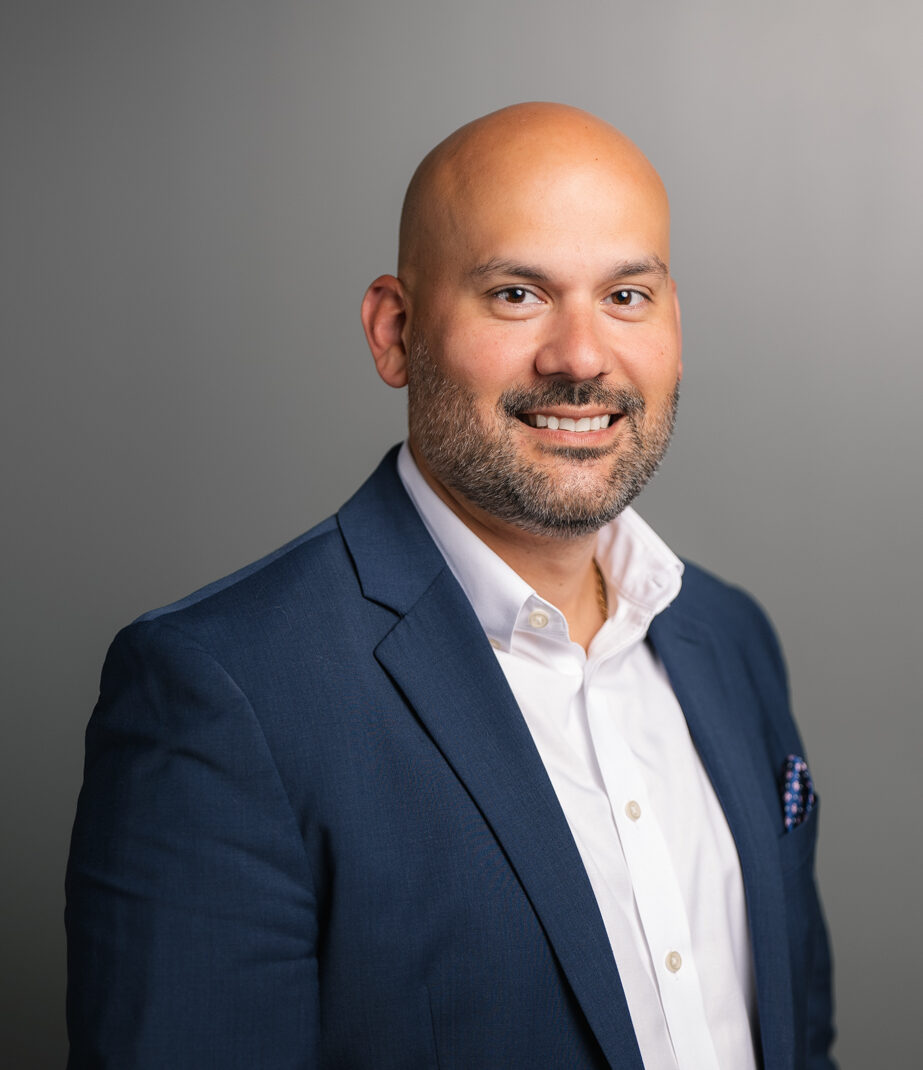
While a student at the University of Houston, John Espinosa expected his internship with an oil and gas company to land him chemical or mechanical engineering work, until he was introduced to information technology instead.
That unexpected pivot sparked what would become an over 20-year career spanning infrastructure engineering, program management and executive leadership across the federal landscape.
Today, as vice president and general manager of government operations and citizen services at General Dynamics Information Technology, Espinosa leads teams supporting some of the government’s most widely used and personally impactful programs. Among them: efforts to modernize the FAFSA, a system his own children rely on to attend college. That firsthand connection, he says, reinforces the importance of delivering secure, reliable and efficient services at scale.
In this Q&A, Espinosa shares how curiosity and mentorship guided his career, why citizen-facing missions are deeply personal, and how his team is working to bring practical, scalable innovation to some of government’s toughest challenges.
Can you provide a brief overview of your professional background and career progression?
I’ve built a career that blends hands-on technical expertise with strategic management of large, complex organizations, with more than two decades of experience across information technology and business leadership.
I began on the service desk and advanced through roles in infrastructure engineering and program management, giving me a deep understanding of operations, mission environments, and customer needs.
Over the years, I’ve led programs for major federal agencies including the General Services Administration, Department of Homeland Security, Environmental Protection Agency, Transportation Security Administration, Federal Bureau of Investigation, Federal Deposit Insurance Corporation, and the Securities and Exchange Commission.
I later served as Business Area Vice President overseeing a diverse portfolio of programs, a Functional Vice President leading our Technology Shared Services, and now serve as Vice President and General Manager for GDIT’s Federal Civilian Government Operations sector, where I lead teams delivering mission-aligned software development solutions, cloud, cyber, and AI.
This broad foundation—spanning technical delivery, program leadership, and executive management—has positioned me well to connect mission priorities, drive operational excellence, and accelerate enterprise growth in my current role.
Why was this the path you chose, and how influential was it to your career?
I actually came across working in the IT field by chance. While studying at the University of Houston, I accepted an internship with a large oil and gas company, where I expected to work in chemical or mechanical engineering. Instead, I was introduced to IT and quickly realized how much I enjoyed the challenge, problem-solving, and the opportunity to improve how things worked.
Early in my career, I focused less on titles and more on learning as much as I could, taking on roles that broadened my experience and positioned me for future opportunities.
Staying curious, seeking out new challenges, and continuously improving the status quo is a mindset I’ve applied throughout my career. It has shaped not only the path I chose but also how I lead today: with a deep appreciation for growth, innovation, and the long game of building capability over time.
Do you have a personal connection to the current mission you support? If so, please explain.
The organization I lead today supports some of the most critical citizen services the federal government provides. And missions that I personally benefit from as well.
For example, our team is improving the application process and processing of the Free Application for Federal Student Aid, otherwise known as FAFSA, for the Department of Education. As a father of three, two of my sons rely on this program each year to attend college, as millions of others do as well. This gives me firsthand appreciation for the importance of secure, efficient, and reliable delivery.
We also use services from agencies such as the United States Postal Service and the Federal Aviation Administration whose missions touch almost every American every day. Leading teams that make sure these missions are being delivered reinforces my commitment to high-quality services that make a meaningful impact on our country.
What are your current top priorities and responsibilities? How do these relate to your company’s overall mission?
My top priorities are operating with excellence and enabling the mission.
Operational excellence is foundational, and my teams are focused on delivering consistent, high-quality services for these critical missions every day by strengthening governance and modernizing processes. We align solutions and capabilities with emerging and future agency needs – particularly around software modernization, AI, and cyber resilience – while ensuring they directly advance agency outcomes.
These missions are personal, impacting millions of Americans, and the solutions we provide need to not only be efficient but also drive a better experience, whether through modernized environments, improved service experiences, or enhanced security and reliability.
Where do you and your team see growth opportunities, or what do you anticipate to be your customers’ top pain points?
Agencies continue to face challenges to meet their mission needs and serve our country’s citizens, while also being cost-sensitive to do more with less. They are looking to leverage advanced technologies but need to do so in smart ways.
This is where GDIT comes in as their partner to help them achieve their mission with technology solutions that work within their existing infrastructures. We continue to modernize legacy environments, harness AI with appropriate governance and strengthen cybersecurity to protect critical citizen data.
Agencies need to solve big problems, such as identifying and stopping fraud, waste and abuse. It’s not about just buying one technology or platform. For example, within a large agency we support, they are tackling FWA in grants management. We have identified ways beyond one technology solution to include their hardware, software licensing, even circuits. Having that insight comes from a deep awareness of their legacy systems and the mission outcome they need.
How are you and your team planning to address and prepare for these opportunities?
At GDIT, we continue to invest in creating technology solutions and capabilities that can be agile, customizable to specific mission needs, and leverage success across government. Combined with strong commercial tech partnerships, we can deliver what’s best for the mission, at speed, and within agencies’ budgets.
Because of our breadth of programs, we can see what is working at one agency and bring it to another facing similar challenges. For example, our AI Cyber Defense mission solution was built for a financial agency program to leverage AI for their security operations center. With that success, we have now been able to bring that solution into two other agencies to secure and protect their critical data from increase in cyberattacks.
Also, agencies need guidance and governance for AI usage. They manage immense amount of data every day, but even in that data rich environment, it can’t be fully harnessed if it’s not tagged appropriately. We developed a proof-of-concept to address the tagging and sorting of millions of records. Not only does this enable better security protocols, the agencies can now better use AI tools with these data sets.
How important is mentorship & networking in GovCon? Were they influential to your career?
Trust and personal connections drive so much of our industry. Personally, throughout my career, someone has always stepped in at the right moment – offering guidance, taking a chance on me, or investing their time to help me succeed. And these mentors have stayed with me through different phases of my career. One of my most trusted mentors was actually my boss early in my career, and I still consult with him for career advice today.
Those experiences had a significant impact on my growth and taught me the value of supporting others the same way. I’m creating a culture and environment in my sector that encourages mentorship and engagement at all levels. We can all learn from others no matter what title or position. I’ve seen firsthand that people buy from people they know and trust, and that relationships built over time often shape the opportunities we receive. That’s why I take pride in paying it forward and being intentional about mentoring and investing in people across my organization
What is something most people don’t know about you personally?
I grew up in a large family, which taught me early on the value of teamwork, collaboration, and unity. Those experiences shaped how I approach leadership today.
Strong teams are built on trust, shared purpose, and the willingness to support one another – principles that were part of my life long before my professional career. That belief has helped me foster a culture across my organization where people feel connected, empowered, and accountable to each other and to the mission. It’s a personal lesson that continues to influence how I lead and how I build high-performing teams.