

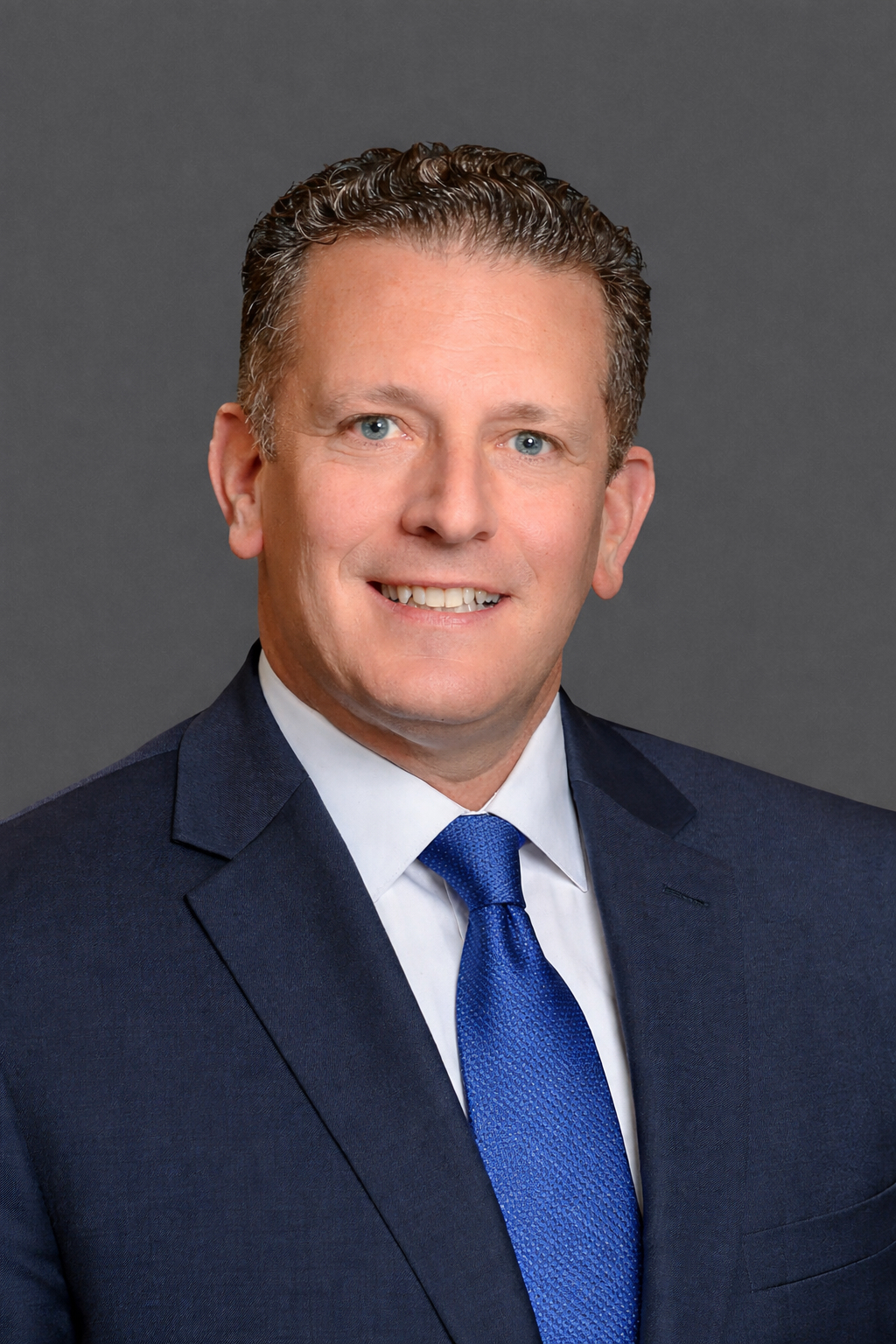
Kevin Bierschenk believes the most effective organizations are those where people understand how their individual contributions support a larger mission. It’s a mindset he developed early, from supporting military families as a U.S. Army civilian, to navigating large-scale telecommunications transformation, and later, helping lead enterprise modernization inside one of the federal government’s largest IT environments.
Throughout his career, Bierschenk has consistently gravitated toward complex, mission-critical transformations. He’s supported the Affordable Care Act’s implementation and served in the Senior Executive Service at the Internal Revenue Service. Ultimately, his work has centered on aligning people, process and technology to deliver meaningful outcomes at scale.
Now, as senior vice president of client solutions at Fedstack, Bierschenk is focused preparing the federal workforce for an AI-driven future. In this Q&A, he reflects on the experiences that shaped his leadership philosophy, the importance of connecting people to mission, and how investing in talent will define the success of government modernization in the years ahead.
Can you provide a brief overview of your professional background and career progression?
I’ve always believed that the most successful organizations are those where people understand how their individual contributions advance a shared mission.
That belief has guided every chapter of my career. I began as a U.S. Army civilian supporting Child and Youth Services, where I learned that serving military families directly enables soldiers to focus on their mission. After building my consulting foundation at Booz Allen Hamilton, I joined Nextel during one of the telecommunications industry’s most significant transformations, supporting the FCC-mandated nationwide 800 MHz spectrum reconfiguration. It was my first experience leading through large-scale organizational change, bringing together engineering, operations, finance, business leadership, regulators, and customers around a common objective. I later supported the FAA’s Federal Telecommunications Infrastructure at Lockheed Martin, reinforcing the importance of mission-critical systems where reliability and public trust are paramount.
The next chapter of my career began at the Internal Revenue Service. Before joining the government, I supported the stand-up of the Affordable Care Act (ACA) program as a contractor with Federal Working Group and later joined the IRS as a Senior Technology Advisor. I supported the integration of 15 major releases and 45 legislatively driven tax provisions before leading the successful transition of the program into operations and maintenance.
Over the next decade, I had the privilege of serving as a career Senior Executive Service (SES). I helped establish the IRS enterprise DevOps capability, led development and execution of the IRS Integrated Modernization Business Plan, and served as a trusted advisor to multiple Chief Information Officers, helping guide cloud modernization, cybersecurity, portfolio governance, workforce transformation, and enterprise strategy across one of the federal government’s largest IT organizations.
After leaving government, I joined Leidos as a Strategic Account Executive before moving to Fedstack, where I now help agencies and systems integrators hire and train engineers in a tech stack infused with artificial intelligence as part of workforce transformation. Looking back, every role expanded the scale of the systems I supported, but my purpose has remained remarkably consistent: bringing people together, aligning organizations, and helping teams turn strategy into meaningful mission outcomes.
Why was this the path you chose, and how influential was it to your career?
I gravitate towards large-scale transformations and connecting people to optimize the use of technology. My BS degree is from Penn State in Human Development and Family Studies, where I was introduced to Systems Theory. One lesson has stayed with me throughout my career: every successful system—whether it’s a family, a business, or a federal agency—depends on each part understanding its role and working together toward a common purpose.
That perspective was reinforced throughout my career. The Army taught me the value of service. Booz Allen taught me structured problem-solving and how to communicate with executive leaders. Nextel demonstrated that technology transformations only succeed when people move together. At the IRS, I had the opportunity to apply those lessons on a much larger scale by helping lead enterprise modernization across one of the federal government’s largest IT organizations.
Those experiences shaped my leadership philosophy. While technology evolves rapidly, leadership is ultimately about building trust, connecting people, and helping organizations successfully navigate change.
Do you have a personal connection to the current mission you support?
Absolutely. Having spent my career both inside and outside government, I understand both the responsibility and privilege of public service and the industry that brings the innovation to move America forward. I am an advocate of industry and empowered federal employees working together to deliver better service to all Americans.
Today, we’re entering another transformational period as artificial intelligence begins reshaping how government delivers services. Having experienced previous technology shifts—from telecommunications to enterprise modernization, I appreciate both the opportunities and the challenges that accompany change.
What motivates me today is helping organizations plan their workforce for the future. Technology alone won’t transform government. People will. And my role to support the federal ecosystem (systems integrators and federal agencies) is to advance AI-driven talent development to enable growth and optimize use of an agency’s technology stack.
What are your current top priorities and responsibilities? How do these relate to your company’s overall mission and growth strategy?
My primary focus at Fedstack is helping organizations modernize their workforce in ways that create lasting mission value as part of growth across the federal marketplace.
I work with customers to design solutions for hiring, training, and deploying (HTD) an early career, AI-native workforce to the SI community and the federal government. Our technical focus includes capabilities in artificial intelligence (AI), cloud and infrastructure, digital services, cybersecurity, and applications development.
One initiative I’m especially passionate about is developing the next generation of AI-native software engineers. Through our Federal Immersion program, I mentor early-career professionals on topics ranging from federal budgeting and acquisition to NIST guidance, customer service, and mission delivery. I want them to understand that successful technology isn’t measured by lines of code—it’s measured by the value it delivers to citizens.
That philosophy aligns perfectly with Fedstack’s mission of building sustainable digital capabilities by investing in people as much as technology.
\Where do you and your team see growth opportunities in your current field or portfolio? What do you anticipate to be your customers’ top pain points?
Throughout my career, I’ve had the opportunity to experience several major technology transitions—from telecommunications to cloud computing, to enterprise modernization, and now artificial intelligence. Each transformation has been different, but one lesson has remained consistent: organizations succeed when they align people, processes, and technology around a shared mission.
Today’s agencies are asking important questions about responsible AI adoption, governance, cybersecurity, workforce readiness, and how to modernize legacy environments while continuing to deliver mission-critical services. The opportunity isn’t simply deploying AI. It’s helping organizations rethink how they operate their portfolio while bringing their workforce along throughout the journey.
How are you and your team planning to address or prepare for these opportunities?
One lesson I’ve learned throughout my career is that lasting transformation always begins with people. Whether supporting the Affordable Care Act, leading the IRS modernization strategy, or preparing agencies for AI, technology has always been only part of the equation.
Success comes from investing in people, building trust, creating strong partnerships, and developing leaders who can navigate change. At Fedstack, we’re helping agencies build those capabilities through AI literacy, agile engineering, workforce development, and continuous learning while mentoring the next generation of federal technology professionals.
How important is mentorship and networking in GovCon? Were they influential to your career?
They’ve been incredibly important.
I’ve been fortunate to work with leaders who invested in my development, challenged me to grow, and opened doors throughout my career. I’ve always believed we have a responsibility to do the same for others. I’ve also learned that meaningful networking isn’t about collecting contacts, it’s about building genuine relationships.
I’ve naturally gravitated toward being a connector. Whether introducing colleagues who should know one another, mentoring future leaders, or bringing together government, industry, and academia to solve difficult problems, I’ve found that innovation often begins with relationships. Some of the most rewarding moments in my career started with a simple introduction that helped others succeed.
What is something most people don’t know about you personally?
People often assume I’m a technology executive. In reality, I am probably a people person who happens to work in technology.
My degree from Penn State is in Human Development and Family Studies, and Systems Theory continues to shape how I think about leadership. Whether it’s a family, a sports team, or a federal agency, every successful system depends on trust, communication, and everyone understanding how their individual role contributes to something larger.
That’s probably why I’ve always enjoyed mentoring, building partnerships, and connecting with people. Whether serving as President of the Association of Former Internal Revenue Executives, participating in organizations like ACT-IAC and WashingtonExec, or simply introducing two people who should know each other, I genuinely enjoy helping others succeed.
Outside of work, my wife Amanda and I and our three children enjoy traveling, especially around major sporting events and I rarely miss an opportunity to cheer on Penn State. We Are!