

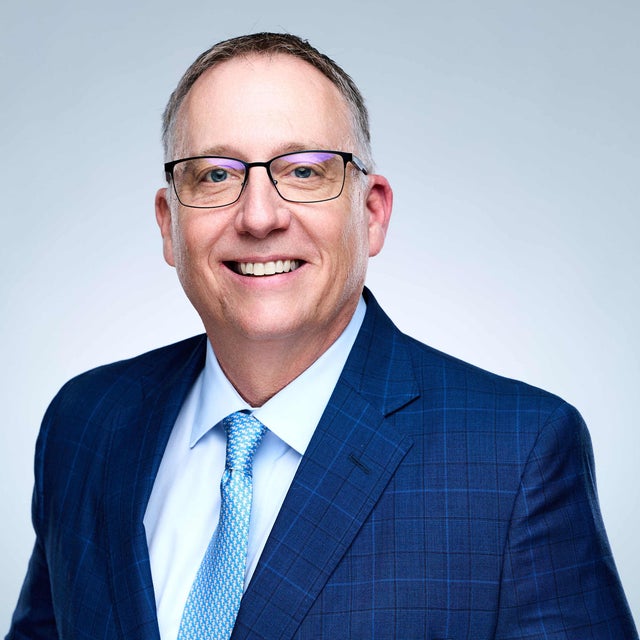
Mike Hurt is learning to fly. He’s working toward his pilot’s license partly for the dream of it, partly because it gets him more time with his kids, including the son he visits at college. It’s a fitting hobby for someone whose whole career has been about covering distance.
Over 30 years in and around the public sector, Hurt never specialized. He started as a developer, moved into business development, then built across Dell, Microsoft and Palo Alto Networks — hardware, software, services, security. He credits that range for everything that followed.
Now group vice president for U.S. public sector at ServiceNow, he’s aimed at a single problem: the federal government wants AI, but most agencies are stuck with legacy systems never built to support it. You can’t bolt AI onto a broken process and expect transformation. Closing that gap is the job.
In this Q&A, Hurt talks about his nonlinear path, why breadth beat specialization, and how he’s helping agencies move from AI experimentation to AI at scale.
Can you provide a brief overview of your professional background and career progression?
My career has been anything but linear. Over 30 years in and around the public sector, I started as a developer, then moved into business development, giving me an early mix of technical and customer-facing experience that became the foundation for everything that followed.
I built on that at Dell across development, business development, sales, and the partner ecosystem, then spent over a decade at Microsoft leading across state and local government, federal health, and defense. After that came Palo Alto Networks, where I served as VP of Federal Sales running teams across DoD, civilian, and intelligence agencies.
ServiceNow came along at exactly the right time, offering a compelling opportunity to lead at the intersection of technology and the public sector. Today, I serve as Group Vice President for the U.S. Public Sector.
Why was this the path you chose, and how influential was it to your career?
Curiosity drove everything. From an early age I was always trying to understand how things worked—how cable systems were wired, how early software and games functioned. That naturally pulled me toward technology and, eventually, toward understanding how technology creates real business outcomes.
Rather than specializing in one area, I kept deliberately broadening my experience across hardware, software, services, and security. That breadth has been the most valuable thing I’ve built. It’s allowed me to connect strategy to execution, lead across very different teams, and navigate complex environments without losing sight of what actually matters: the mission.
Do you have a personal connection to the current mission you support?
Very much so. The public sector shows up in everyday life in ways people don’t always stop to notice—the roads you drive, the services your community depends on. That reminds me why getting this right matters so much.
It’s also personal through my family. My brother works in state and local government, and our conversations give me a direct, unfiltered view into the real challenges agencies face. That keeps me grounded. Every community, regardless of size or geography, deserves the same quality of innovation and service—and that belief drives a lot of how I approach this work.
What are your current top priorities and responsibilities? How do these relate to your company’s overall mission/growth strategy?
My focus is on helping the public sector use AI to modernize in ways that fundamentally change how the government operates. That means deploying agentic AI to automate complex workflows, replacing legacy systems that have held agencies back for decades, and accelerating adoption of our FedRAMP High and IL5-ready capabilities in secure environments.
All of that connects to ServiceNow’s broader vision of becoming the core operating system of modern government. We work with every Cabinet-level agency and all military branches, which puts us in a unique position to drive that transformation in a meaningful, lasting way.
Where do you and your team see growth opportunities in your current field or portfolio you support?
The federal government is at an inflection point with AI. The ambition is there, but the gap is in execution.
Most agencies are stuck with fragmented legacy systems that were never designed to support intelligent workflows. You can’t bolt AI onto a broken process and expect transformation. That’s the core challenge we help solve.
The biggest opportunity right now is helping agencies move from AI experimentation to AI at scale. The OneGov agreement tackled another major pain point, procurement friction, by simplifying the licensing model and lowering barriers to modernization. Longer term, I see enormous opportunity in workforce augmentation: using AI to free people up for the work that actually requires human judgment.
How are you and your team planning to address/prepare for these opportunities?
The OneGov agreement with GSA was a critical strategic move. Removing procurement friction matters just as much as the technology itself—if it’s hard to buy, agencies won’t modernize, full stop.
Beyond that, we’re letting results do the talking. Major federal agencies are already reporting reduced service backlogs, improved workforce productivity, and faster response times. That proof builds trust, and trust accelerates the next wave of adoption.
How important is mentorship and networking in GovCon? Were they influential in your career?
Mentorship and networking are critical in GovCon. It is a small, tightly connected community where relationships directly impact success. Government customers are not looking for point solutions. They expect integrated, mission-focused outcomes that require strong partnerships among technology providers, system integrators, and agencies. Those relationships are essential to delivering real results.
Throughout my career, the GovCon community, and specifically customers, have been highly influential. They’ve helped me understand the ecosystem, collaborate more effectively, and bring the right capabilities together to solve complex challenges.
What is something most people don’t know about you personally?
At my core, I’m very family oriented. For years, my kids and their activities have been my main focus, and they’re still the most important part of my life. Outside of work, I spend most of my time staying connected with them and offering support.
Earlier in my career, I owned and operated a tax business for about 10 years, which gave me a strong sense of accountability and a different perspective on running a business.
Lately, I’ve started learning to fly and am working toward my pilot’s license, which has always been a dream of mine. It’s also a great way for me to spend more time with my family, especially when I visit my youngest son at college.